Quality
Over Trends
A style manifesto for the Prime — why the aim was never to look current, but to look inevitable.
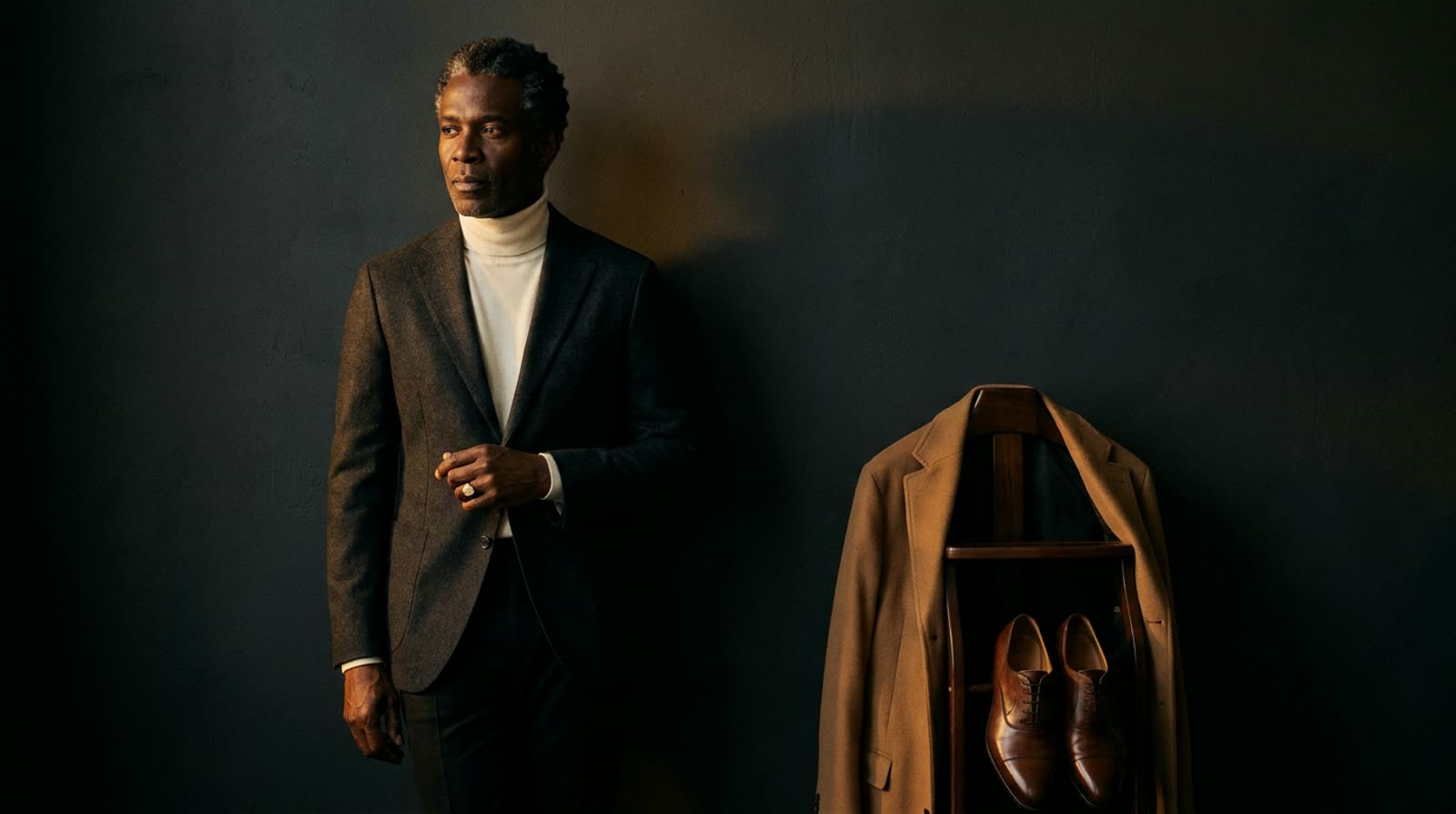
Somewhere around forty, you notice something the culture would rather you didn't. You've watched the cycle turn enough times to recognise it. The wide lapel returns as the narrow lapel. The thing you were told was finished gets announced as new. The sneaker that was embarrassing three years ago is suddenly the only one anyone photographs. Nothing improved. The wheel turned, and someone repriced it.
At twenty-five, this was invisible to you. At forty-five, it's the most obvious thing in the room.
A Subscription You Never Signed
A trend is a business model wearing a scarf. It is designed, marketed, and — this is the part that matters — scheduled to die. The entire mechanism depends on the thing becoming embarrassing in eighteen months so you'll buy its replacement. That isn't style. That's a subscription you never agreed to sign.
There's no shame in having paid it. The incentive is engineered to be nearly irresistible: novelty feels like vitality, and vitality is the one thing we're told we're losing. But novelty is not vitality. It's the simulation of vitality, sold at retail, renewed annually.
The Arithmetic Changes After Forty
By forty, the ledger looks different. You've bought the disposable and felt it disappoint in the hand — the seam that gave out, the fabric that pilled, the cut that required a body you never had. You've also, if you were paying attention, bought one or two things that never once let you down.
That contrast isn't nostalgia. It's data. And it points somewhere specific: the aim is not to look current. It's to look inevitable.
A trend is a business model. A standard is a self-portrait.
That is what quality actually buys. Not a logo, not a price tag — inevitability: the quiet sense that you didn't follow anyone into the room; you simply belong there. Someone dressed for trends reads as auditioning for the moment. Someone dressed for themselves reads as the moment itself.
The Standard
The wardrobe that works is small. Four pieces chosen with intention outlast forty chosen with urgency. A jacket that was cut, not copied. Shoes worth resoling — because a shoe you can repair is a shoe somebody expected you to keep. A watch that will outlive the trend that once dismissed it.
These are not purchases. They are positions — declarations about who you intend to be, made in cloth. And positions, unlike purchases, compound.
Taste Is What You Like. Style Is What You've Decided.
Here is why this is harder than it sounds. You cannot dress like who you are until you've decided who that is.
Trends let you postpone that decision forever. They offer a costume for every season and ask nothing about your interior life — which is exactly why they're so easy to accept and so empty to wear. Quality forces the question, who am I dressing as?, and then rewards the answer with a decade of use.
This is why style after forty isn't a matter of taste. Taste is what you like. Style is what you've decided — and the difference between them is the difference between a wardrobe and a position.
Wear It Like You Mean It
Buy less. Choose better. Wear it like you mean it.
Not because a stranger will notice the label. Because you will notice the difference — every morning, in the mirror, in the quiet steadiness of a person who stopped auditioning years ago and has been himself ever since.
Style is self-respect made visible.
Get the Newsletter
Weekly insights on mastering your Prime — delivered free. No spam. No youth-chasing.
Join the List